
Therapy Resistance
The challenge: therapy resistance
Chronic diseases have been increasing significantly in recent years and are becoming ever more difficult to treat. This is evidenced not only by the daily practical experience of practicing therapists, but also by the constantly increasing consumption of medication in industrialized countries – far exceeding what would be justified by the increase in life expectancy.
Do you feel the same way?
The patients are massively burdened with an almost unbelievable variety of pathogens and environmental toxins (heavy metals, radionuclides, fungi, acidosis, electromagnetic smog, viruses, parasites, etc.). It's impossible to know where to begin treatment.
Many patients show symptoms of chronic long-term stress (burnout, exhaustion, depression, tension, etc.).
The patients complain of unclear, chronic symptoms, often without any corresponding clinical findings.
Allergies and autoimmune processes are increasing to an unprecedented extent.
Patients are becoming increasingly unresponsive. They no longer respond, or only respond inadequately, to regulatory medicine treatments (e.g., acupuncture, homeopathy, bioresonance) that were effective just a few years ago. As a result, lasting cures are not achieved, and more and more often, only symptom shifts occur.
Working with extremely blocked and low-energy patients is becoming increasingly strenuous and draining. As a therapist, you have to expend more and more of your own energy just to make any progress. The result: exhaustion and the risk of burnout, not only for the patient but also for the therapist.
With the increasing liberalization of the healthcare market, patients are becoming ever more demanding. Expectations for success ("repair mentality") and thus the time and financial pressure on therapists – that is, on YOU! – are rising.
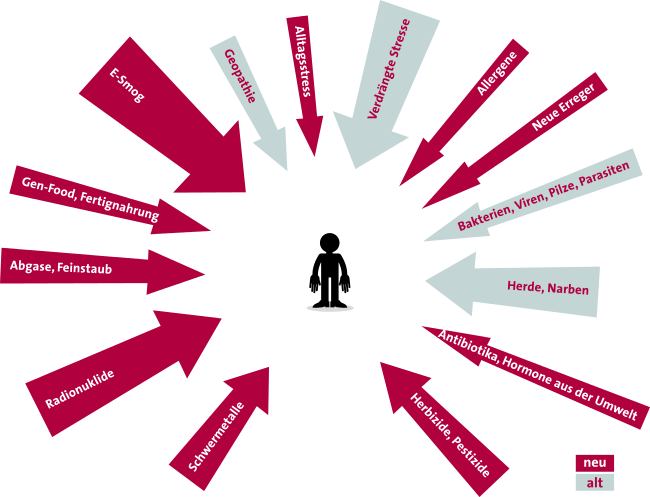
Environmental stress, psychosocial stress, burnout
According to the unanimous opinion of most holistic medical practitioners, this increase in chronic problems is not due to individual, separate causes, but rather to a complex network of mutually reinforcing environmental and pathogen stresses, combined with increasing psychosocial stress.
Negative environmental influences are not only increasing year by year, but they are also changing in nature. From electrosmog, heavy metals and radionuclides to pesticide cocktails in food and new pathogens – a long list of toxins and stressors presents our immune system with the challenge of coping with something completely unknown, something unprecedented in our evolution.
Combined with the psychological pressure many face at work and in their personal relationships, this situation leads to a chronic stress response. This weakens our energy system, disrupts our natural regulatory capacity, and exhausts our immune defenses. In our experience, this connection is also one of the causes behind the widespread burnout syndrome.
Impaired regulation can lead to organ dysfunction.
According to the principles of energy medicine, a balanced energy system is essential for the organism to respond appropriately to stress. If the energy system is impaired—in energy medicine, this is also referred to as "blockages" and "obstacles to therapy"—the body's natural regulatory mechanisms can no longer function properly. This opens the door to many illnesses and ailments, potentially leading to organ dysfunction, treatment resistance, and symptom shifts.
These connections, incidentally, are not a finding of holopathy, but rather stem from the energy concepts of the Chinese and are now considered established knowledge in naturopathy. Regulatory therapies based on this knowledge are playing an increasingly important role in complementary medicine.
Any therapy that does not take this connection into account – whether conventional or complementary medicine – remains superficial and thus ultimately only focuses on symptoms.
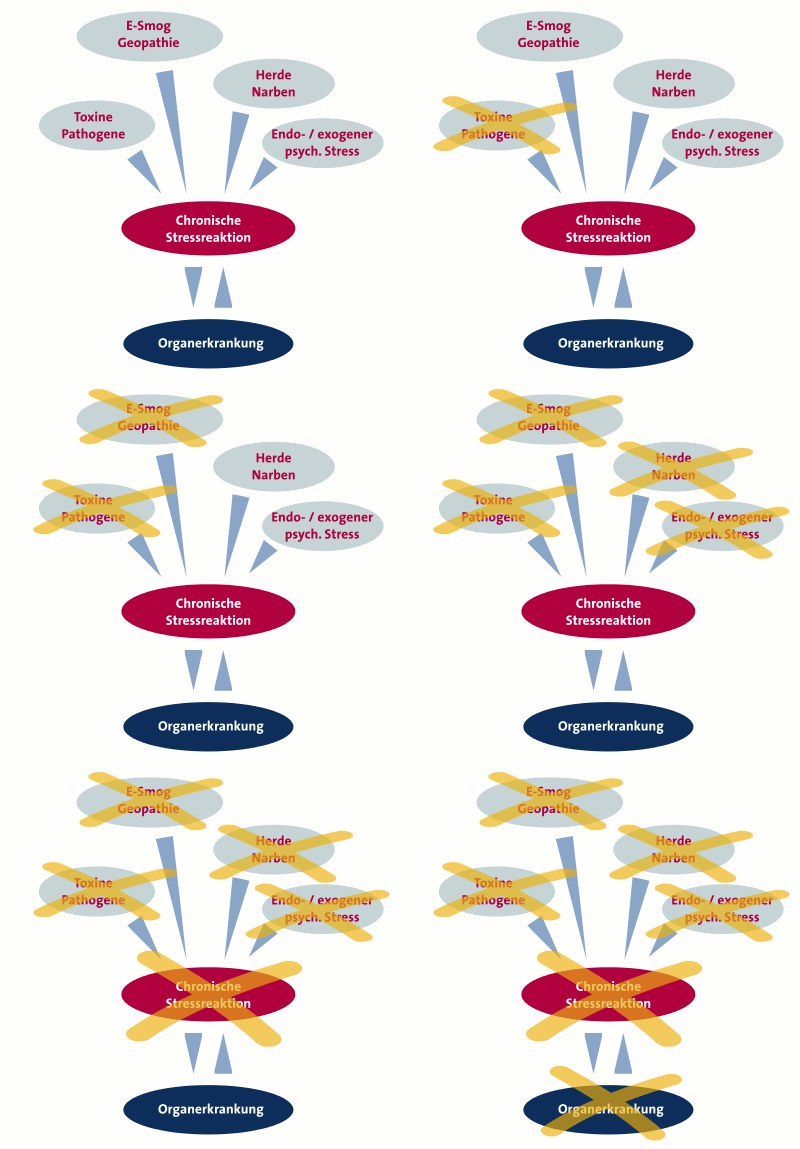
Therapeutic goal of holopathy: suppression of the central chronic stress response
According to the principles of holopathy, at the heart of every (chronic) illness lies a persistent internal stress response, constantly fueled by environmental pollutants, pathogens, and both exogenous and endogenous stressors. Depending on individual predisposition, this stress response can manifest as various organ diseases.
As long as this stress reaction persists, any treatment that focuses solely on the organs will not be deep enough and therefore often cannot lead to a causal cure.
In contrast, the treatment strategy of holopathy consists of depriving this internal chronic stress reaction of its "fuel" and thus freeing the body's own self-healing powers from their blockage.
Legal notice
Holopathy – a further development of bioresonance – is a form of so-called biophysical vibrational therapy. Its aim is to balance the body's energy system – what the Chinese called "Chi" – through biophysical testing and subsequent application of low-energy electromagnetic substance spectra, thereby releasing blockages and strengthening the body's self-healing powers. Although convincing successes have been achieved in practice with holopathy since 1994 across a wide range of applications, and extensive positive testimonials exist, it is – like all regulatory medicine procedures (eg, acupuncture, homeopathy, bioresonance, kinesiology, osteopathy, craniosacral therapy, etc.) – not currently recognized by the scientific community. The QuintStation is not intended for medical diagnoses and therapies and therefore cannot replace them.